Limehouse Basin Gardeners Small Garden Makeover Case Study
If you have a compact outdoor space near the water, you already know the problem: it can feel cramped, overlooked, and strangely difficult to use. A Limehouse Basin gardeners small garden makeover case study is useful because it shows how a tight London garden can be turned into something calmer, more functional, and easier to live with without pretending space suddenly appears out of nowhere. In this guide, we look at how a small-garden transformation is planned, what tends to work best in a basin-side setting, and which decisions make the biggest difference when every metre counts.
There is no magic trick here, to be fair. The best small garden makeovers usually come from clear priorities, tidy structure, and a realistic plan for maintenance. If you are weighing up a refresh, or you simply want to understand what a professional approach looks like, this case-study style article will walk you through the process in plain English.
Table of Contents
- Why Limehouse Basin gardeners small garden makeover case study Matters
- How Limehouse Basin gardeners small garden makeover case study Works
- Key Benefits and Practical Advantages
- Who This Is For and When It Makes Sense
- Step-by-Step Guidance
- Expert Tips for Better Results
- Common Mistakes to Avoid
- Tools, Resources and Recommendations
- Law, Compliance, Standards, or Best Practice
- Options, Methods, or Comparison Table
- Case Study or Real-World Example
- Practical Checklist
- Conclusion
- Frequently Asked Questions
Why Limehouse Basin gardeners small garden makeover case study Matters
Small gardens in Limehouse Basin tend to face a few familiar pressures. Some are tucked beside apartments or terraces with limited sunlight. Others are visible from several angles, so every untidy corner gets noticed. And many are used in multiple ways at once: a morning coffee spot, a storage area, a place for pots, and maybe a patch of green that should feel restful rather than busy.
That is why a small garden makeover case study matters. It shows how design decisions work in the real world, not just on a sketch. When the space is compact, a poor layout can make the garden feel even smaller. Good structure, however, can make it feel more open, easier to maintain, and surprisingly inviting. You will notice that the best makeovers are not packed with features. They are selective. A little restraint goes a long way.
In a local London setting, the gardener also has to think about access, waste removal, privacy, and how much time the owner actually wants to spend maintaining the space. That practical layer matters just as much as the planting. In our experience, people often come asking for "more greenery", but what they really want is a space that feels finished and manageable on a Tuesday evening after work.
For a broader view of the services typically involved, it can help to browse the services overview and the team's approach on the about us page.
How Limehouse Basin gardeners small garden makeover case study Works
A small-garden makeover usually starts with observation, not with digging. That sounds obvious, but it is where many rushed projects go wrong. Before any planting or hard landscaping begins, the space needs a proper read: where does the light fall, where does water collect after rain, which areas feel awkward to walk through, and which views should be softened or hidden?
Once those basics are clear, the design can begin to take shape. A good plan often uses simple layers:
- Structure: edging, paving, decking, screens, or defined planting beds.
- Function: seating, access routes, storage, or a small working zone.
- Softness: planting, texture, and a little seasonal change.
- Maintenance: a finish that suits the owner's time and budget.
The process then moves from rough clearance to shaping, installing, and planting. If the garden is cluttered or overgrown, a careful garden clearance step often comes first, followed by selective landscaping or lighter landscape gardening work depending on how ambitious the brief is.
What makes the "case study" part useful is the sequence. You can see how the choices build on one another. A compact garden is not transformed by one dramatic feature. It changes because each layer is doing a job. Even a tiny shift in path width or bed shape can alter how the whole place feels. Funny how that works, really.
Key Benefits and Practical Advantages
A small garden makeover is not only about looks. That is part of it, sure, but the more meaningful gains are usually practical.
- Better use of space: Every section earns its place, so the garden feels useful instead of awkward.
- Cleaner sightlines: Careful layout can make a cramped plot seem more balanced and less cluttered.
- Easier maintenance: A well-planned space saves time on trimming, mowing, and general upkeep.
- Improved privacy: Screens, planting, and boundary treatment can soften overlooking windows or busy communal views.
- Stronger year-round appeal: With the right mix of hard and soft surfaces, the garden does not disappear in winter.
There is also a comfort benefit that people often underestimate. A tidy, coherent garden can change how you use your home. It becomes somewhere you want to sit, not just somewhere you pass through on the way to the bins. That is a real shift.
If ongoing care is a concern, pairing the redesign with garden maintenance can help keep the space looking sharp after the makeover is complete. For lawns, a regular lawn mowing routine may be part of the plan too, although many compact gardens work better with reduced lawn area or none at all.
Who This Is For and When It Makes Sense
This kind of project makes sense if your garden is small but feels underused, messy, or difficult to enjoy. It is particularly relevant if:
- the garden has poor flow or a confusing layout
- you want somewhere attractive without a heavy maintenance burden
- the current space is mostly hard standing, dead patches, or neglected planting
- privacy is poor and you feel exposed
- the garden looks tired but you do not want a full rebuild
It is also a good fit if you are preparing a property for sale or letting and need the outside space to present well without overcomplicating things. Small gardens can make a strong first impression when they are neat, proportioned, and clearly intentional.
On the other hand, if the issue is structural damage, major drainage problems, or unstable trees, the job may need a different scope. In those cases, a garden makeover may be only one piece of the puzzle. A proper site assessment matters. No shame in that, by the way. Sometimes the honest answer is that a pretty finish has to wait until the basics are sorted.
If tree issues are part of the picture, the site may also require tree lopping and removal. For projects with overgrown hedging, hedge trimming can make a dramatic difference surprisingly quickly.
Step-by-Step Guidance
Here is a practical way to think about a small garden makeover from start to finish.
1. Review the space honestly
Stand in the garden and note what is actually happening. Where do you feel cramped? Which areas are muddy, shaded, or wasted? What do you want the garden to do: seat four people, create privacy, frame a view, or simply look tidy from inside?
2. Decide the main purpose
Small gardens need a clear purpose. If everything is a priority, nothing works properly. Choose one main job and one supporting job. For example: "quiet seating area" plus "low-maintenance planting". That is far more effective than trying to fit in a dining zone, storage, a lawn, a wildlife corner, and a feature bed all at once.
3. Clear what no longer helps
Old pots, broken edging, dead shrubs, and random clutter can eat space without you realising. A careful clearance stage gives the design room to breathe. It is not glamorous, but it is often the turning point.
4. Set the structure first
In compact spaces, hard landscaping has outsized importance. Even a simple change such as better edging, a more coherent path line, or a defined sitting area can make the whole garden feel organised. If decking is suitable for the site and budget, decking services can help create a clean, usable platform, especially where the ground is uneven or you want a dry place to sit.
5. Add planting with restraint
Planting should support the structure, not fight it. Choose a manageable mix: a few statement plants, some evergreen backbone, and seasonal interest where it counts. Repeating fewer plant types often looks better than stuffing in lots of different species. The eye needs somewhere to rest.
6. Finish with maintenance planning
A makeover only stays good if it is maintainable. Decide what will need trimming, watering, feeding, or seasonal cutting back. If the owner has limited time, it makes sense to simplify the planting and reduce lawn-heavy areas.
That is the basic flow. Clear. Shape. Plant. Maintain. Nothing fancy, but solid.
Expert Tips for Better Results
In a small garden, the details do the heavy lifting. A few expert habits make the finished space feel more polished and easier to live with.
- Repeat materials: Using the same paving, timber tone, or edging detail helps a tiny garden feel calmer.
- Go vertical carefully: A fence, trellis, or planted screen can add height without using valuable ground space.
- Use fewer shapes: Simple geometry is often kinder to a compact plot than lots of curves and busy angles.
- Choose planting for the site: Wind, shade, dampness, and reflected heat near buildings all affect performance.
- Leave room to move: If moving around the garden feels awkward, the design is working against you.
A small trick that often helps is keeping the centre of the garden visually lighter and pushing stronger elements to the edges. The effect is subtle, but you notice it as soon as you step outside. Suddenly it feels less boxed in.
Another practical point: if your garden gets gritty debris, leaves, or seasonal waste from surrounding trees, plan for regular tidying rather than waiting for a once-a-year overhaul. That can make the difference between a garden that looks finished and one that slips back into chaos after a month. Honestly, nature is persistent.
Common Mistakes to Avoid
Small-garden projects can go sideways in predictable ways. Most of the mistakes are simple, which is why they are easy to miss.
- Overcrowding the design: Too many features make the garden feel smaller, not richer.
- Ignoring maintenance: A beautiful but high-effort scheme can become a burden fast.
- Choosing the wrong lawn area: In very compact gardens, too much lawn often looks fussy and is awkward to care for.
- Forgetting drainage: Wet feet, patchy planting, and slippery surfaces are not fun.
- Using too many colours or materials: The result can feel messy rather than designed.
- Skipping access planning: If tools, bins, or furniture cannot move through the space easily, the layout is not finished.
One of the biggest mistakes is trying to make a small garden do the job of a large one. It cannot. And that is fine. A good design embraces the scale instead of arguing with it.
Tools, Resources and Recommendations
You do not need a huge toolkit to carry out a sensible makeover, but you do need the right kind of equipment and a proper plan for waste, access, and finish quality. For most projects, the essentials include hand tools for pruning and shaping, basic cutting equipment, edging tools, a reliable way to move materials, and suitable containers for green waste.
On the planning side, it helps to use a simple sketch or measured plan before work begins. Even a rough drawing can prevent expensive guesswork. Mark the sunniest areas, the wettest spots, where doors open, and where furniture actually fits. It sounds almost too simple, yet it saves a lot of mistakes.
Useful service pages to compare when shaping a scope include garden clearance, landscaping, and garden maintenance. If you are trying to understand the full range of options before deciding what to prioritise, the services overview is a sensible starting point.
For a cleaner long-term finish, many small gardens also benefit from a recycling-minded approach to waste and materials. If that matters to you, the company's recycling and sustainability page is worth a look. It helps frame how cuttings, offcuts, and old materials are handled with a bit more care.
Law, Compliance, Standards, or Best Practice
For most small garden makeovers, the key issue is not a complex legal framework but sensible best practice. That said, there are still important points to keep in mind in the UK.
Firstly, if the work involves trees, boundary structures, shared access, or neighbouring property, it is wise to check responsibilities and avoid assumptions. A good contractor will handle the work carefully and communicate clearly if anything seems borderline. Secondly, safety matters. Tools, trip hazards, waste movement, and unstable features should all be managed properly, especially in tight residential spaces where people may be coming and going.
Professional standards matter too. Clear quotations, transparent payment terms, and public information about safety and insurance are signs that a provider takes the work seriously. You can review practical details on pricing and quotes, payment and security, and insurance and safety. For peace of mind, it is also worth reading the health and safety policy.
Best practice is not about paperwork for the sake of it. It is about making sure the job is done neatly, safely, and with no unpleasant surprises halfway through. That is what most homeowners really want anyway.
Options, Methods, or Comparison Table
When deciding how to approach a small garden makeover, it helps to compare the main methods side by side. The right choice depends on budget, condition, and how much change you want.
| Approach | Best for | What it does well | Trade-offs |
|---|---|---|---|
| Light refresh | Gardens that are tidy but dated | Quick improvement, low disruption, neat result | Limited change in layout or structure |
| Clearance plus redesign | Overgrown or cluttered gardens | Resets the space and improves flow | More labour and planning needed |
| Hard landscaping focus | Uneven, muddy, or impractical gardens | Creates strong structure and usable surfaces | Less planting unless carefully balanced |
| Plant-led makeover | Spaces that need softness and seasonal interest | Improves atmosphere and biodiversity feel | Needs more care if poorly chosen |
For many Limehouse Basin gardens, the sweet spot is a blend. A bit of clearance, a stronger layout, and restrained planting usually beats an all-or-nothing approach. You do not need to turn the space into a show garden. You just need it to work.
Case Study or Real-World Example
Here is a realistic example based on the kind of brief that comes up often in compact London gardens.
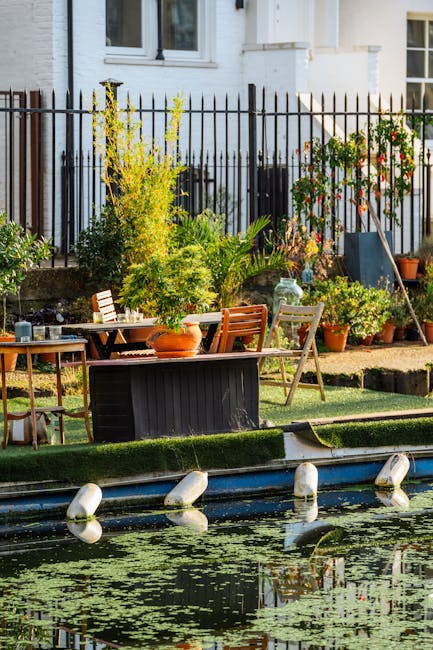
A homeowner near Limehouse Basin had a small rear garden that had slowly become a catch-all space. There were a few tired planters, patchy ground cover, a narrow strip of lawn that never looked quite right, and a seating area that felt squeezed against the wall. The garden was not unusable, but it was not especially inviting either. On a grey afternoon, it looked even smaller than it was.
The first step was to remove clutter and anything that no longer earned its place. That created breathing room straight away. Next, the layout was simplified so the seating area felt intentional rather than squeezed in. A clearer edge line helped define the usable zone, and planting was reduced to a smaller number of stronger choices so the space stopped feeling busy.
Instead of trying to preserve every feature, the design focused on three things: a place to sit, a sense of privacy, and a garden that would still look decent with limited upkeep. The result was not dramatic in a flashy way. It was better than that. It was calm. The sort of garden where you can step outside with a cup of tea and actually stay there for ten minutes without mentally listing jobs to do.
That is the real value of a good makeover case study. It shows that progress does not always mean adding more. Sometimes it means taking away the wrong things and letting the useful parts breathe.
Practical Checklist
Use this checklist before starting your own compact garden project:
- Have you defined the main purpose of the garden?
- Have you measured the space properly, including door swings and access points?
- Do you know which areas get the most sun, shade, or standing water?
- Have you decided what should be removed, kept, or redesigned?
- Is the layout easy to walk through and maintain?
- Have you chosen materials that suit the scale of the garden?
- Are the plants appropriate for the light and exposure conditions?
- Have you planned how the space will be maintained after completion?
- Do you need clearance, trimming, or ongoing maintenance support?
- Have you reviewed the practical service information and quote process?
Expert summary: In a small Limehouse Basin garden, the winning formula is usually simple: clear the clutter, simplify the layout, keep the materials consistent, and choose planting that you can maintain without dread. Small space, big decisions. That is the game.
Conclusion
A Limehouse Basin gardeners small garden makeover case study is most useful when it shows the thinking behind the result, not just the before-and-after angle. Small gardens improve fastest when design follows function: clear the clutter, set strong boundaries, choose a layout that fits real life, and keep maintenance realistic. Do that well and the space stops feeling like a leftover strip of land and starts feeling like part of the home.
If you are planning your own project, start with the basics and be honest about how you want to use the garden. The rest tends to fall into place more smoothly than people expect. Not perfectly, perhaps. But sensibly, which is usually better.
Get a free quote today and see how much you can save.
Frequently Asked Questions
What is a small garden makeover case study?
It is a practical example that shows how a compact garden was assessed, redesigned, and improved. A good case study explains the problem, the process, and the reasoning behind the final result.
Why are small gardens harder to design?
Because every choice has a bigger impact. In a small garden, a single awkward feature can dominate the whole space, while a smart change can make it feel much larger and easier to use.
Can a tiny garden really be made to feel bigger?
Yes, often quite noticeably. Clear sightlines, simple materials, restrained planting, and a layout that reduces visual clutter can all make a small garden feel more open.
Do I need landscaping or just garden maintenance?
That depends on the condition of the space. If the garden is structurally fine but just untidy, maintenance may be enough. If the layout feels wrong or the space is difficult to use, some landscaping may be the better option.
What should come first in a small garden makeover?
Usually clearance and planning. Before adding anything new, it helps to remove what no longer works and define the main purpose of the space.
Is decking a good idea in a small garden?
It can be, especially if the ground is uneven or you want a clean seating area. The key is not to overdo it. In a compact space, decking should support the layout, not swallow it.
How much planting is too much?
When the garden starts to feel crowded, hard to move through, or visually noisy, you have probably gone too far. Fewer, better-chosen plants often look more polished than lots of small additions.
What are the most common mistakes in compact garden projects?
The biggest ones are overcrowding, poor maintenance planning, ignoring drainage, and trying to fit too many functions into one small area.
How long does a small garden makeover usually take?
That varies with the scope, access, and condition of the garden. A light refresh may be quicker, while clearance plus redesign naturally takes longer. It is best to ask for a clear plan and timeline rather than guess.
Should I worry about safety and insurance?
Yes, at least enough to ask sensible questions. Any professional garden work should be carried out safely, with suitable care for access, tools, waste, and any boundary or tree-related issues. The provider's insurance and safety information should be easy to review.
How do I keep a newly made-over small garden looking good?
Keep the maintenance plan realistic. Regular trimming, occasional clearing, and a simple seasonal check-over will prevent the space from slipping back into chaos. A beautiful small garden is usually a maintained one, not a one-off project.
What is the next sensible step if I want a makeover?
Start with an honest assessment of the space, then compare the likely options and costs. If you need help understanding what is possible, reviewing the services and quote information is a sensible move before making decisions.
And really, that first step is often the hardest. Once you see the space clearly, the rest becomes much less mysterious.